
Façade Structural Engineering Services
Abacus Contractors Design Services (Abacus CDS) provides façade structural engineering services focused on the safe, compliant, and buildable design of façade systems.
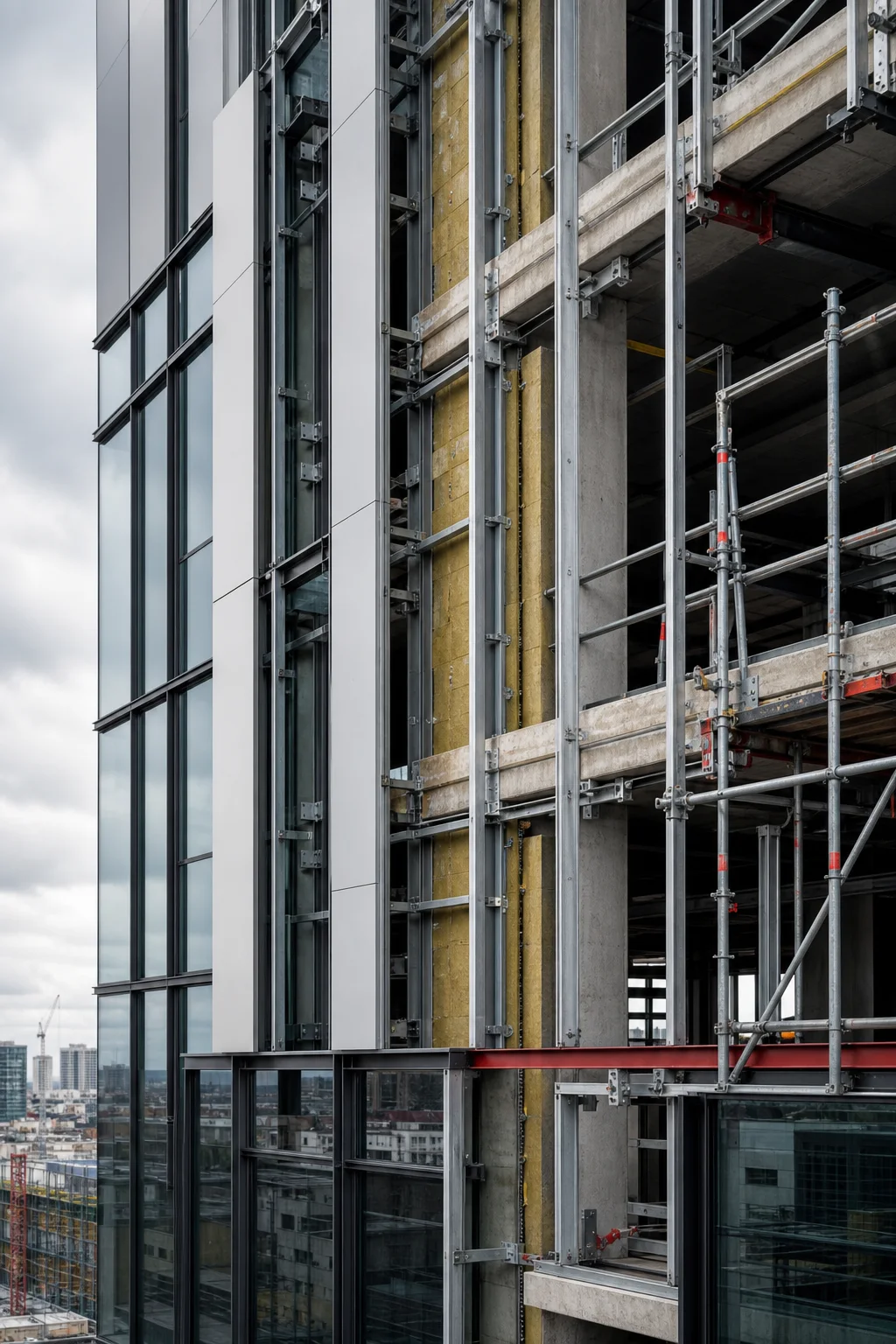
Our services focus on the structural behaviour of façade systems, including load transfer, movement accommodation, fixings, and interfaces with the primary structure. We work alongside other appointed specialists responsible for fire, thermal, acoustic, and environmental performance.
Working closely with architects, developers, and contractors, we deliver robust structural analysis and technical assurance for commercial, residential, and industrial projects.
Our Façade Structural Engineering Services
- Structural design of facade systems
- Assessment of wind loading and other imposed structural actions
- Design of fixings, anchors, brackets, and secondary support steelwork
- Movement, tolerances, and interface design between the façade and the primary structure
- Technical reviews and structural design assurance of contractor and specialist façade proposals
Our Façade Engineering Services Support
Developers & Contractors
Ensuring that façade designs are safe, buildable, and compliant.
Architects
Integrating structural principles early in the design process to enhance project feasibility.
Surveyors & Property Managers
Assessing existing façades for performance and safety risks.
Façade Structural Engineering Services
Structural Design & Analysis
Our structural engineering expertise ensures façade systems can safely resist applied loads and accommodate building movements while maintaining long-term structural integrity.
We provide:
- Structural load assessments, including wind actions, building movements, and imposed stresses
- Structural support design for cladding, curtain walling, glazing, and rainscreen systems
- Coordination of façade structural elements with the primary building structure
All assessments are limited to structural considerations only.
Façade Structural Engineering Services
Building Movement & Structural Coordination
We design façade systems that safely accommodate expected building movements without inducing distress or structural failure.
Our approach includes:
- Allowance for thermal expansion, structural deflections, and settlement
- Design of connections and interfaces to ensure safe load transfer
- Coordination of tolerances and movement strategies with the primary structure and façade contractors
FAQ
Frequently asked questions
What is façade structural engineering?
Façade structural engineering is the design and analysis of the supporting structures behind building façades. It ensures that cladding, curtain walling, glass panels, and other façade elements are safely supported, compliant with UK building regulations, and coordinated with the main structural framework.
Why is façade structural engineering important for contractors?
Proper structural engineering ensures façades are safe, buildable, and fit for purpose. Contractors benefit from reduced installation risk, fewer delays, and assurance that the design meets regulatory standards.
What types of façade systems do you design?
We design a wide range of façade systems, including curtain walling, rainscreen cladding, SFS (steel frame systems), bespoke glass façades, and ventilated cladding systems, all tailored to the building’s structure and contractor requirements.
How do façade engineers work with BIM?
BIM integration allows façade engineers to model structural support, coordinate with other trades, and identify clashes before construction. Abacus CDS uses BIM to streamline design, improve accuracy, and assist contractors in planning installation sequences.
What UK regulations affect façade structural design?
Façade designs must comply with UK Building Regulations, including Approved Document A (structure), B (fire safety), and C (site preparation). Engineers also follow British Standards such as BS EN 1991 and BS EN 1993 for structural design.
How do engineers calculate loads for façades?
Load calculations consider self-weight, wind loads, live loads, and temporary construction loads. Abacus CDS performs detailed structural analysis to ensure the façade can safely withstand all anticipated forces.
What is a curtain wall façade?
A curtain wall is a non-loadbearing façade that hangs from the building structure. Structural engineers design support brackets and mullions to transfer loads safely to the main frame while accommodating thermal expansion and movement.
How do rainscreen façades differ structurally?
Rainscreen façades use a ventilated cavity behind the cladding. Engineers design support systems that allow for expansion, weather protection, and integration with secondary steelwork, ensuring durability and compliance.
Can façade engineers provide temporary works solutions?
Yes, we design temporary supports for partially installed façades, ensuring stability during construction. This includes bracing, scaffold interfaces, and load transfer solutions.
How do engineers manage high-rise façade projects?
High-rise projects require careful load analysis, wind considerations, and coordination with crane and access requirements. Abacus CDS provides robust designs and guidance to maintain safety at height.
What materials do façade engineers work with?
We design façades using glass, aluminium, steel, terracotta, stone, and composite panels. Material selection is based on performance, weight, cost, and suitability for the building structure.
How do engineers reduce installation risk?
Risk is minimised through detailed design, installation sequencing, site-specific assessments, and coordination with contractors. Early involvement ensures design clarity and safer construction practices.
What is secondary steelwork in façades?
Secondary steelwork supports façade cladding and transfers loads to the primary structure. Engineers design this framework to meet safety standards while allowing for efficient installation.
How are glass façades supported structurally?
Glass panels are supported with brackets, mullions, and fixings designed to carry dead and live loads safely. Engineers calculate stresses and deflection limits to prevent failure or damage.
How do façade engineers handle thermal expansion?
Engineers incorporate flexible fixings, expansion joints, and allowances in the design to accommodate thermal movement without affecting performance or safety.
What challenges arise in complex geometries?
Non-linear or curved façades require advanced structural analysis to ensure load paths are safe and supports are accurate. Our engineers use 3D modelling and bespoke calculations to manage these complexities.
How do engineers coordinate with other trades?
Coordination is achieved through BIM, site meetings, and integrated design reviews. This prevents clashes, ensures clear sequencing, and maintains safety across all trades.
Can engineers assess existing façades?
Yes, we provide structural assessments of existing façades, identify defects, and recommend remedial works or upgrades to meet current safety and compliance standards.
What is the role of a façade engineer in fire safety?
Engineers ensure façade systems meet fire safety requirements, selecting appropriate materials, designing compartmentation, and advising on regulations such as Approved Document B.
How do engineers optimise façade systems for cost?
Cost optimisation is achieved through material selection, design simplification, value engineering, and minimising installation complexity while maintaining structural integrity.
What drawings do façade engineers provide?
Engineers provide detailed technical drawings, load calculations, and BIM models that guide contractors during installation and ensure compliance with the design intent.
How long does façade structural design take?
The duration depends on project complexity, size, and level of detail required. Typically, early engagement allows engineers to complete design and analysis within the design programme, supporting smooth construction.
Can façade engineers support refurbishment projects?
Yes, we assess existing structures, propose new façade solutions, and design structural supports that integrate with the building while meeting safety and regulatory standards.
How do engineers handle unusual loads like wind or seismic forces?
We perform detailed structural analysis for wind, seismic, and other dynamic loads, ensuring façade support systems are resilient and meet UK design codes.
How does façade engineering improve construction efficiency?
Clear designs, temporary works planning, and early coordination with contractors reduce on-site errors, improve buildability, and accelerate installation, making construction more efficient and cost-effective.
Abacus CDS Focuses on Technical and Structural Aspects
What We Do Not Cover
- Airtightness modelling, testing, or certification
- Water penetration modelling or testing
- Thermal performance calculations, including U-values, psi-values, or Part L compliance
- Acoustic modelling or acoustic performance assessments
- Fire engineering services or façade fire strategy development
OUR SERVICES
Safe, Compliant, and Cost-effective Integrated Design Solutions

CONTACT
Get in touch for to discuss your project with our engineering team
Compliant, cost-effective engineering and integrated design solutions for your construction projects. Contact Abacus Contractors Design Services today to discuss your project requirements.